Table of Contents
Introduction
Sixth-generation fighter jets are expected to transform military aviation through advanced stealth, artificial intelligence, longer flight ranges and cooperation between crewed aircraft and autonomous drones. 6th gen fighter Unlike today’s fifth-generation fighters, these future aircraft are being developed as part of connected combat systems designed to share information and coordinate missions.
For readers following Airlinesnews and sixth-generation fighter jet news, the United States’ F-47, the UK-Japan-Italy Global Combat Air Programme (GCAP) and China’s emerging next-generation aircraft are attracting significant attention. These projects represent different approaches to achieving air superiority in future conflicts.
As of October 2026, sixth-generation fighter development remains an international competition. Although several programmes have made progress, no sixth-generation fighter has entered operational squadron service. What Is a 6th gen fighter Jet?
A sixth-generation fighter jet is a next-generation military aircraft designed to go beyond the capabilities of current fifth-generation fighters, such as the F-22 Raptor and F-35 Lightning II.
There is no universally agreed technical definition of a sixth-generation aircraft. However, these programmes generally aim to combine low-observable stealth, advanced sensors, powerful computing systems, improved range and integrated operations with uncrewed aircraft.
Rather than relying solely on the performance of one fighter, future air combat systems are expected to connect multiple platforms. This approach could allow pilots to receive information from drones, surveillance aircraft, satellites and other networked assets.
The objective is to improve situational awareness, operational flexibility and survivability in increasingly contested airspace.
6th gen fighter Jets: Latest News in 2026
1. US F-47 Fighter Development
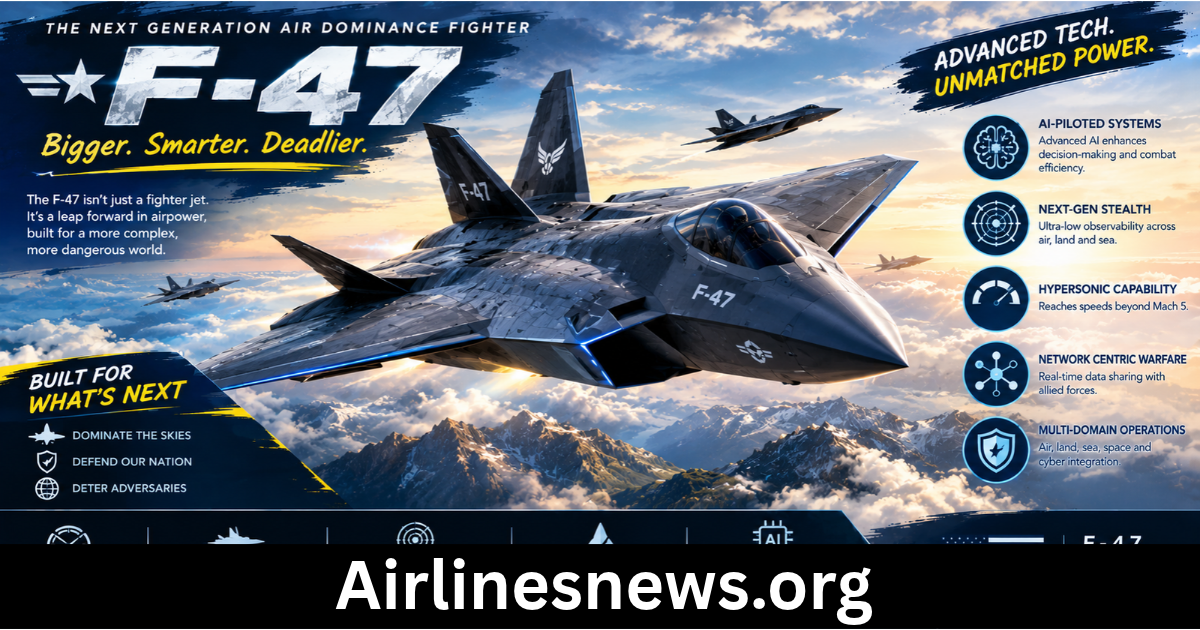
The American F-47 is one of the most closely watched sixth-generation fighter programmes. Boeing received the US Air Force’s engineering and manufacturing development contract in March 2025 under the Next Generation Air Dominance (NGAD) programme.
In July 2026, Defence News reported that the programme was producing test aircraft and remained on schedule for a targeted first flight in 2028. The aircraft is intended to replace the F-22 Raptor as the US Air Force’s future air-superiority fighter.
The F-47 is expected to combine advanced stealth, longer range and integrated mission systems. Many technical details remain classified, so its ultimate performance cannot yet be independently assessed.
2. Global Combat Air Programme: GCAP
The Global Combat Air Programme brings together the United Kingdom, Italy and Japan to develop a next-generation combat aircraft. The initiative combines Britain’s Tempest project with Japan’s future fighter programme and Italy’s aerospace expertise.
In July 2026, the three countries announced a £4.6 billion contract to advance the aircraft’s design. The programme aims to introduce the new fighter into service around 2035. <Cite refs={[“turn907155search4”]}/>
GCAP is designed to support future combat operations through advanced sensors, connected systems and potential integration with uncrewed aircraft. Its international structure also allows participating countries to share development costs and industrial expertise.
3. China’s Next-Generation Fighter Projects
China is also developing advanced combat aircraft intended to strengthen its future airpower. Two aircraft widely referred to by observers as the J-36 and J-50 have attracted attention following reported test flights.
These designations are unofficial labels used by analysts, rather than confirmed public names from China’s military. The aircraft are associated with different design approaches, but their intended roles, technical specifications and operational timelines remain uncertain.
A flying prototype is an important milestone, but it does not establish that an aircraft has completed testing or is ready for military service. Comparisons with the F-47 must therefore account for limited publicly verified information.
Key Technologies Behind 6th gen fighter Aircraft
Advanced Stealth Technology
Stealth is expected to remain a defining feature of sixth-generation fighters. Designers aim to reduce radar detectability through aircraft shaping, specialised materials and careful integration of external features.
Future aircraft may also incorporate improved electronic warfare capabilities to detect, disrupt or avoid hostile sensors. However, stealth does not make an aircraft completely invisible, and the effectiveness of these technologies depends on the surrounding environment and opposing detection systems.
Artificial Intelligence and Sensor Fusion
Artificial intelligence (AI) could help pilots process large amounts of information from multiple sensors. Instead of interpreting separate data feeds independently, advanced systems may combine information into a more comprehensive operational picture.
AI-assisted systems could support route planning, threat identification and coordination with uncrewed aircraft. Human pilots would remain central to mission decisions, with the precise division of responsibilities depending on the aircraft’s design and approved operating procedures.
Collaborative Combat Aircraft and Drone Teaming
One of the biggest changes in future air combat is the planned integration of crewed fighters with autonomous or remotely supervised aircraft.
The US Air Force’s Collaborative Combat Aircraft programme is intended to develop uncrewed platforms that can support crewed aircraft. Depending on their design, these systems could provide additional sensors, extend surveillance coverage or perform other supporting missions.
The F-47 is being developed within a wider networked approach to air dominance, rather than as an isolated fighter.
Advanced Engines and Greater Range
Future fighters are expected to place greater emphasis on efficient propulsion, electrical power generation and thermal management. These capabilities matter because advanced sensors and computing systems require substantial electrical power and produce heat.
The F-47 is expected to offer a combat radius exceeding 1,000 nautical miles, according to US Air Force disclosures. That figure is a stated programme objective, not a result from an operational aircraft. <Cite refs={[“turn907155search1″,”turn907155search5”]}/>
Longer range could be especially valuable in regions where military bases are far apart and aerial refuelling opportunities are limited.
6th gen fighter vs Fifth-Generation Fighter Jets
The main difference between fifth- and sixth-generation fighters is expected to be the level of integration between the aircraft, its sensors and other combat platforms.
| Feature | Fifth-generation fighters | Sixth-generation programmes |
|---|---|---|
| Stealth | Advanced low-observable design | Expected to develop further |
| Sensors | Integrated sensor systems | More extensive network integration |
| AI assistance | Varies by aircraft and upgrade | Expected to play a larger role |
| Drone cooperation | Possible through selected systems | A central design objective in several programmes |
| Development status | Operational aircraft available | Still in development |
| Examples | F-22, F-35 | F-47, GCAP |
The F-22 and F-35 remain highly capable aircraft. Sixth-generation projects are intended to address future threats rather than demonstrate that existing fighters have become ineffective.
Actual comparisons will require flight testing, operational evaluations and reliable information about each aircraft’s capabilities.
When Will 6th gen fighter Jets Enter Service?
The expected introduction dates vary by programme.
The US F-47 has a targeted first flight in 2028, while operational service is anticipated in the 2030s. GCAP aims to enter service around 2035. These are programme targets, and development schedules can change as testing and procurement progress.
Before a new fighter enters service, it must undergo extensive flight testing, weapons integration, software validation and operational evaluation. The military must also establish training programmes, maintenance systems and the supporting infrastructure required for deployment.
Consequently, the first flight of a prototype does not mean an aircraft is ready for combat.
Why 6th gen fighter Matter for the Future of Aviation
Sixth-generation aircraft reflect a wider transformation in military aviation. Future air operations are expected to rely increasingly on shared information, coordinated platforms and the ability to operate in environments protected by advanced air-defence systems.
These developments also present significant challenges. Advanced materials, specialised engines, software development and autonomous systems can make programmes extremely expensive and technically complex.
International partnerships such as GCAP aim to distribute costs and combine expertise, while programmes such as the F-47 focus on developing capabilities for specific national defence requirements.
For aviation news readers, the most important developments to follow include prototype testing, engine advances, autonomous aircraft integration, funding decisions and confirmed operational milestones.
Frequently Asked Questions About 6th gen fighter Jets
1. What is a sixth-generation fighter jet?
A sixth-generation fighter is a future military aircraft intended to combine advanced stealth, integrated sensors, AI-assisted systems, improved propulsion and cooperation with uncrewed platforms.
2. Which country is developing the F-47 fighter?
The United States is developing the F-47 through the US Air Force’s NGAD programme, with Boeing leading the engineering and manufacturing development effort.
3. When will the F-47 make its first flight?
The first flight is targeted for 2028. This remains a planned milestone rather than a completed event.
4. Is the F-47 better than the F-35?
The F-47 is designed to address future air-superiority requirements, while the F-35 is an operational fifth-generation multirole fighter. Because the F-47 remains under development, a definitive performance comparison is not yet possible.
5. What is the GCAP sixth-generation fighter?
GCAP is a joint programme involving the United Kingdom, Italy and Japan to develop a next-generation combat aircraft. The programme aims to introduce the aircraft into service around 2035.
6. Is China developing sixth-generation fighter jets?
China has conducted reported test flights of advanced aircraft commonly called the J-36 and J-50 by observers. Their official designations, specifications and operational readiness have not been fully confirmed publicly.
7. Are 6th gen fighter jets already in service?
No publicly confirmed sixth-generation fighter has entered operational squadron service as of October 2026. Several programmes are progressing through design, development and testing.
Conclusion
Sixth-generation fighter jets represent the next major stage in military aviation, with advanced stealth, AI-assisted systems, improved range and cooperation between crewed aircraft and autonomous platforms at the centre of development. The US F-47, the international GCAP programme and 6th gen fighter China’s emerging aircraft demonstrate the growing global interest in future air superiority. However, these projects remain at different stages of development, and their final capabilities will only become clearer through testing and official disclosures.
Related Posts

How Many Boarding Groups Does Southwest Have? 8 Easy Tips
How Many Boarding Groups Does Southwest Have?Southwest Boarding Groups ExplainedWhat…

Amex Airline Partners Complete Guide to Using American Express Points for Flights
IntroductionWhat Are Amex Airline Partners?How Do Amex Airline Point Transfers…
F-47 Fighter Jet: Latest News, Specifications, Features and Future of US Air Power
IntroductionWhat Is the F-47 Fighter Jet?F-47 Fighter Jet Latest News…