Table of Contents
Introduction
The F-18 Super Hornet is one of the most important carrier-based fighter aircraft in modern military aviation. Developed by McDonnell Douglas, now part of Boeing, f-18 super hornet this twin-engine multirole fighter is designed to operate from aircraft carriers and perform a wide range of combat missions.
Known for its impressive speed, advanced radar, powerful weapons systems, and versatility, the Super Hornet serves as a major component of the United States Navy’s carrier air wings. f-18 super hornet It can perform air-to-air combat, precision ground attacks, reconnaissance, fleet defense, and aerial refueling.
With modern upgrades such as the Block III configuration, the F/A-18 Super Hornet continues to evolve to meet changing military requirements.
What Is the F/A-18 Super Hornet?
The F/A-18 Super Hornet is a fourth-generation, twin-engine, carrier-capable multirole fighter aircraft. The letters F/A represent its fighter and attack capabilities.
The aircraft was developed as a larger and more advanced evolution of the original F/A-18 Hornet. Although both aircraft share a similar design, the Super Hornet features a larger airframe, improved range, more powerful engines, and upgraded avionics.
There are two main versions:
- F/A-18E: A single-seat fighter aircraft.
- F/A-18F: A two-seat fighter aircraft with an additional crew member.
Both versions are designed to perform multiple military missions, f-18 super hornet making the Super Hornet an essential aircraft for naval aviation.
History and Development of the F/A-18 Super Hornet
The F/A-18 Super Hornet was developed during the 1990s to provide the U.S. Navy with an advanced replacement for older carrier-based aircraft.
The aircraft was officially rolled out in 1995 and completed its first flight in November of that year. Following extensive testing, it entered operational service in 1999.
The Super Hornet gradually replaced the F-14 Tomcat and older F/A-18 Hornet variants in the U.S. Navy.
Important development milestones include:
- 1995: F/A-18E/F Super Hornet is introduced.
- November 1995: First flight takes place.
- 1999: Super Hornet enters U.S. Navy fleet service.
- 2001: Initial operational capability is achieved.
- 2002: The aircraft begins its first operational deployment.
- 2020: Boeing delivers Block III test aircraft to the U.S. Navy.
- 2020s: Block III upgrades introduce improved cockpit technology and networking capabilities.
F/A-18 Super Hornet Specifications
The Super Hornet combines a powerful twin-engine design with advanced flight systems and carrier-operating capabilities.
| Specification | F/A-18E/F Super Hornet |
|---|---|
| Manufacturer | Boeing |
| Original manufacturer | McDonnell Douglas |
| Aircraft type | Multirole strike fighter |
| First flight | November 1995 |
| Length | Approximately 18.3 meters |
| Wingspan | Approximately 13.7 meters |
| Height | Approximately 4.9 meters |
| Engines | Two General Electric F414 turbofans |
| Maximum speed | Approximately Mach 1.6 |
| Service ceiling | Over 50,000 feet |
| Maximum takeoff weight | Approximately 66,000 pounds |
| Crew | One or two |
| Primary role | Air-to-air and air-to-ground combat |
Specifications may vary according to aircraft configuration and mission requirements.
How Fast Is the F/A-18 Super Hornet?
The F/A-18 Super Hornet is a supersonic fighter capable of reaching approximately Mach 1.6, according to Boeing’s published specifications.
Its twin General Electric F414 engines provide the thrust required for high-speed flight, acceleration, and demanding carrier operations.
Although it is not the fastest fighter aircraft in the world, its combination of speed, maneuverability, weapons capacity, f-18 super hornet and advanced electronics makes it a highly versatile combat platform.
F/A-18 Super Hornet Engine and Performance
The Super Hornet uses two General Electric F414-GE-400 turbofan engines equipped with afterburners.
Each engine produces approximately 22,000 pounds of thrust under specified conditions.
The twin-engine configuration provides strong acceleration and the performance needed for demanding naval aviation operations.
Other important performance features include:
- High-speed supersonic flight.
- Advanced flight-control technology.
- Reinforced landing gear for carrier operations.
- Folding wings for aircraft carrier storage.
- Aerial refueling capability.
- Advanced navigation and electronic systems.
Its strengthened structure and carrier-compatible design allow it to operate from the flight decks of U.S. Navy aircraft carriers.
F/A-18 Super Hornet Weapons and Armament
The F/A-18 Super Hornet can carry different types of weapons depending on its mission and configuration.
Air-to-Air Missiles
The aircraft can use several air-to-air weapons, including:
- AIM-9 Sidewinder.
- AIM-9X Sidewinder.
- AIM-120 AMRAAM.
These missiles provide different engagement capabilities for aerial combat and fleet defense.
Internal 20mm Cannon
The Super Hornet is equipped with an M61A1/A2 Vulcan 20mm six-barrel rotary cannon.
This internally mounted weapon provides an additional capability for close-range aerial engagements.
Air-to-Ground Weapons
The Super Hornet can carry precision-guided bombs and other air-to-ground weapons.
Compatible weapons include JDAM and f-18 super hornet laser-guided bombs, allowing the aircraft to perform precision-strike missions.
Anti-Ship and Anti-Radiation Weapons
Depending on its configuration, the aircraft can also carry weapons such as the AGM-84 Harpoon and AGM-88 HARM.
These capabilities make the Super Hornet useful for maritime strike and suppression of enemy air defenses.
Different Types of F/A-18 Super Hornet Aircraft
The Super Hornet family includes two primary fighter versions and several major upgrade configurations.
1. F/A-18E Super Hornet
The F/A-18E is the single-seat version. It is designed for air superiority, fighter escort, maritime operations, and precision ground attacks.
Its single-seat cockpit allows one pilot to manage flight operations and f-18 super hornet mission systems.
2. F/A-18F Super Hornet
The F/A-18F is the two-seat version of the aircraft.
It includes a second crew member who can assist with mission management, sensors, and weapons systems. This arrangement is particularly useful during complex operations.
3. F/A-18E/F Block II
The Block II configuration introduced important technological improvements, f-18 super hornet including advanced radar, upgraded sensors, and enhanced avionics.
Its AESA radar improved the aircraft’s ability to detect and track multiple targets.
4. F/A-18E/F Block III
The Block III Super Hornet is the latest major upgrade configuration.
Its notable features include:
- Advanced cockpit displays.
- Improved networking capabilities.
- Enhanced computing systems.
- Reduced radar signature.
- Extended structural service life.
- Modernized mission systems.
The Block III upgrade is designed to keep the Super Hornet relevant in increasingly demanding combat environments.
What Is the Difference Between the F/A-18 Hornet and Super Hornet?
Although their names are similar, the original F/A-18 Hornet and the Super Hornet are different aircraft configurations.
The Super Hornet is approximately 25% larger than its predecessor and offers improved range, payload capacity, f-18 super hornet and carrier suitability.
It also features more powerful engines and upgraded avionics.
The original Hornet was introduced during the 1980s, while the Super Hornet entered fleet service in 1999.
These improvements helped the U.S. Navy replace older aircraft while maintaining a flexible carrier-based strike capability.
F/A-18 Super Hornet Combat History
The Super Hornet has participated in several military operations since entering service.
Its first combat action occurred in November 2002 during operations over Iraq. Since then, f-18 super hornet it has supported various U.S. military missions in the Middle East and other regions.
The aircraft has performed air patrols, precision strikes, maritime security missions, and carrier-based combat operations.
Its ability to switch between air-to-air and air-to-ground roles makes it particularly valuable during complex military deployments.
Which Countries Operate the F/A-18 Super Hornet?
The F/A-18 Super Hornet has been operated or selected by several countries.
Major operators include:
- United States.
- Australia.
- Kuwait.
The United States Navy operates the largest fleet, while Australia and Kuwait use the aircraft for their respective national defense requirements.
The original F/A-18 Hornet family also has a much wider international operator base, f-18 super hornet but these countries should not be confused with Super Hornet operators.
F/A-18 Super Hornet vs F-16 Fighting Falcon
The F/A-18 Super Hornet and F-16 Fighting Falcon are both multirole fighter aircraft, but they were designed for different operational environments.
The Super Hornet is a twin-engine fighter developed primarily for aircraft carrier operations. It features reinforced landing gear, folding wings, and specialized carrier equipment.
The F-16 is a single-engine fighter primarily designed for land-based operations.
The Super Hornet offers carrier compatibility and two-engine redundancy, while the F-16 is a smaller and generally lighter aircraft.
Both fighters have undergone extensive modernization and remain important in international military aviation.
Is the F/A-18 Super Hornet Still in Service?
Yes. The F/A-18 Super Hornet remains an important part of the United States Navy’s carrier aviation fleet.
The aircraft continues to receive technological upgrades, including the Block III configuration, f-18 super hornet to improve its performance and operational capabilities.
Although the F-35C Lightning II is gradually expanding its role in carrier aviation, the Super Hornet continues to provide valuable multirole capabilities.
Its proven design, weapons flexibility, and carrier compatibility ensure that it remains a significant naval fighter aircraft.
Frequently Asked Questions (FAQs)
1. How fast is the F/A-18 Super Hornet?
The F/A-18 Super Hornet can reach approximately Mach 1.6 according to Boeing’s published specifications.
2. Who manufactures the F/A-18 Super Hornet?
The aircraft was originally developed by McDonnell Douglas and is now manufactured by Boeing.
3. How many engines does the Super Hornet have?
It has two General Electric F414 turbofan engines with afterburners.
4. What is the difference between F/A-18E and F/A-18F?
The F/A-18E is a single-seat version, while the F/A-18F has two seats for a pilot and an additional crew member.
5. Can the F/A-18 Super Hornet operate from aircraft carriers?
Yes. It is specifically designed for carrier operations, f-18 super hornet including catapult launches and arrested landings.
6. What is the latest version of the Super Hornet?
The Block III configuration is the latest major upgrade, featuring advanced cockpit displays, improved networking, and enhanced mission systems.
7. Is the Super Hornet a stealth fighter?
No. It is not a true stealth fighter, although Block III incorporates design improvements intended to reduce its radar signature.
8. Is the F/A-18 Super Hornet better than the F-16?
They have different strengths. The Super Hornet is designed for carrier operations and has two engines, while the F-16 is a lighter, single-engine fighter primarily used from land bases.
Conclusion
The F/A-18 Super Hornet is one of the most versatile and successful naval fighter aircraft in modern aviation. Its powerful twin engines, supersonic speed, advanced weapons systems, f-18 super hornet and carrier-based design make it an essential part of modern military operations. From the original F/A-18E/F models to the advanced Block III configuration, the Super Hornet has continuously evolved to meet changing defense requirements. Although newer stealth aircraft are entering service, the Super Hornet remains an important fighter for the U.S. f-18 super hornet Navy and international operators. Its combination of reliability, flexibility, and combat capability ensures its continued importance in naval aviation.
Related Posts

How Do Airplane Engines Work? 1 A Simple Guide to Aircraft Propulsion
How Do Airplane Engines Work?What Are the Main Parts of…
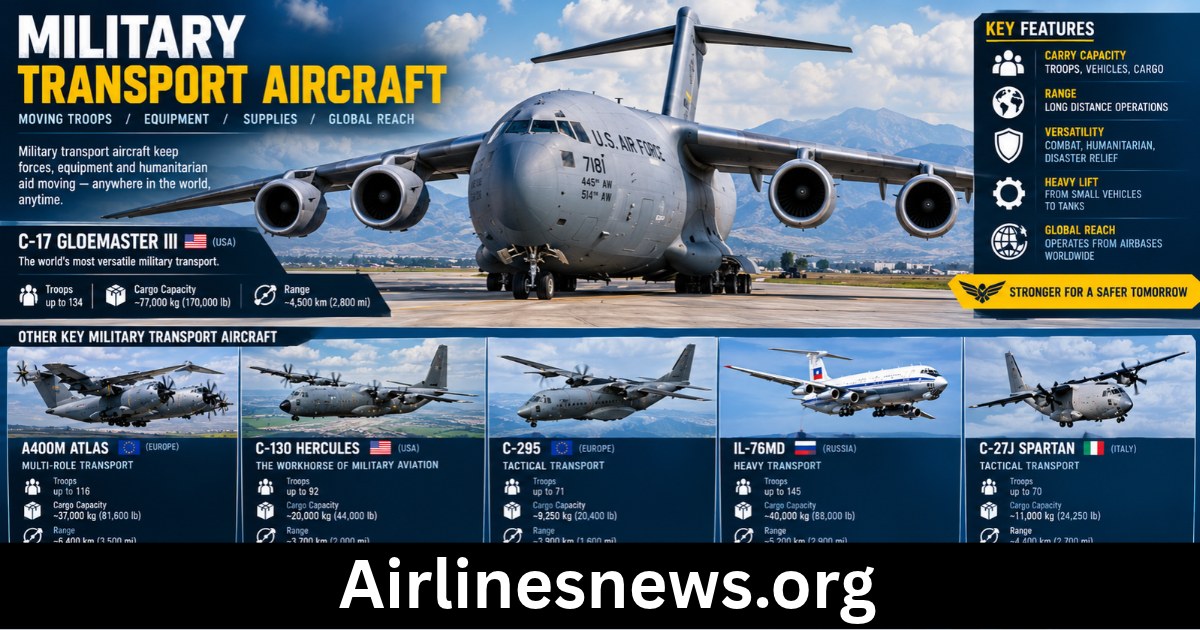
Military Transport Aircraft: 1 Powerful Aircraft That Keep the World Connected
What Is a Military Transport Aircraft?Major Types of Military Transport…

Royal Air Force Aircraft: 1 Types, Roles, and Modern UK Military Planes
What Aircraft Does the Royal Air Force Use?Main Types of…