Table of Contents
The How Many Passengers Can a Plane Hold depends on its size, model, cabin layout, and airline configuration. A small regional aircraft may carry fewer than 100 people, how many passengers can a plane hold while popular commercial jets often accommodate between 150 and 300 passengers. The world’s largest passenger airplane, the Airbus A380, has a certified maximum seating capacity of 853 passengers.
Whether you are curious about airplane capacity or comparing different commercial aircraft, understanding passenger limits helps explain how airlines choose planes for different routes.
How Many Passengers Can a Typical Commercial Plane Hold?
Most commercial passenger airplanes carry between 100 and 300 passengers. Smaller aircraft are commonly used for regional flights, how many passengers can a plane hold while larger wide-body jets serve busy domestic and international routes.
Here is a general overview:
- Small regional aircraft: Around 30–100 passengers.
- Single-aisle passenger jets: Approximately 100–240 passengers.
- Medium and large wide-body aircraft: Around 200–400 passengers.
- Very large passenger aircraft: More than 400 passengers, depending on configuration.
These figures are general ranges rather than fixed limits. The exact capacity depends on the aircraft model and the seating arrangement selected by the airline.
Passenger Capacity of Popular Commercial Airplanes
Different aircraft are designed to serve different passenger needs. Some prioritize efficiency on shorter routes, while others provide greater capacity for long-distance travel.
| Aircraft model | Approximate passenger capacity |
|---|---|
| Airbus A220-100 | 100–120 |
| Airbus A220-300 | 120–160 |
| Airbus A320 | 150–180 typically |
| Airbus A321 | 180–220 typically |
| Boeing 737-800 | 178 typical two-class layout |
| Boeing 737-900ER | 193 typical two-class layout |
| Airbus A330 | 220–300 in typical three-class layouts |
| Airbus A380 | Up to 853 |
Capacities are based on manufacturer information and may vary by aircraft variant and airline configuration.
How Many Passengers Can a Boeing 737 Hold?
The Boeing 737 is one of the most widely used commercial aircraft families. Airlines operate different versions for domestic and international routes.
A Boeing 737-800 can accommodate approximately 178 passengers in a typical two-class configuration, with a maximum seating capacity of 189. how many passengers can a plane hold The larger 737-900ER can carry up to 220 passengers in its maximum seating arrangement.
The actual number of seats depends on the airline’s cabin design, including the number of business-class and economy seats.
How Many Passengers Can an Airbus A320 Hold?
The Airbus A320 is a popular single-aisle aircraft used by airlines around the world. It generally carries around 150 to 180 passengers in common configurations.
Newer A320neo-family aircraft can accommodate higher passenger numbers. Depending on the model and approved layout, the A320 can have up to 194 seats, how many passengers can a plane hold while the A321 can accommodate up to 244.
Its combination of passenger capacity, operating efficiency, and route flexibility makes the A320 family suitable for many short- and medium-haul flights.
How Many Passengers Can the Airbus A380 Hold?
The Airbus A380 is the largest passenger airliner ever built. Its two full-length passenger decks allow airlines to accommodate far more travelers than conventional single-deck commercial jets.
The aircraft has a certified maximum seating capacity of 853 passengers in an all-economy configuration. how many passengers can a plane hold However, airlines generally install fewer seats to provide different travel classes and more passenger space.
For example, Airbus lists a typical four-class configuration with approximately 545 seats. The final layout depends on the airline operating the aircraft.
What Determines How Many Passengers a Plane Can Carry?
An airplane’s passenger capacity is influenced by several important factors.
1. Aircraft Size and Design
Larger aircraft generally have more cabin space for seats. Their length, width, and deck arrangement influence how many passengers can be accommodated.
2. Airline Seating Configuration
Airlines decide how to divide cabin space between economy, premium economy, business, and first class. More premium seating usually means fewer total passengers because those seats require more space.
3. Safety Regulations
Aircraft must meet aviation safety and certification requirements. These include approved seating layouts, emergency exits, evacuation standards, and limits on the number of occupants.
4. Flight Range and Operating Conditions
Passenger numbers can also be affected by operational requirements. Long-distance flights may need additional fuel, while baggage, cargo, weather, how many passengers can a plane hold and runway conditions can influence an aircraft’s permitted takeoff weight.
Do All Seats on a Plane Have to Be Filled?
No. Airlines do not need to fill every seat before an aircraft can take off. A flight can depart with empty seats as long as it meets operational and safety requirements.
Airlines use passenger demand, ticket sales, route popularity, and operating costs to determine which aircraft to schedule. A flight may be nearly full during a busy holiday period but have many empty seats on a quieter day.
Why Do Airlines Use Different Aircraft Sizes?
Airlines choose aircraft based on the number of passengers expected, route distance, airport facilities, and operating costs.
Smaller aircraft are often more practical for routes with lower demand or airports with limited infrastructure. Larger airplanes are useful on busy routes where airlines need to transport hundreds of passengers at once.
Choosing the right aircraft helps airlines balance passenger demand, fuel use, and operating efficiency.
Frequently Asked Questions
1. How many passengers can a normal airplane hold?
A typical commercial passenger airplane can carry approximately 100 to 300 passengers. The exact number depends on its model and cabin configuration.
2. What airplane can carry the most passengers?
The Airbus A380 holds the record for the highest certified passenger seating capacity among passenger airliners, with a maximum of 853 seats.
3. How many passengers fit on a Boeing 737?
A Boeing 737 can carry different passenger numbers depending on its version. how many passengers can a plane hold The 737-800 typically has 178 seats in a two-class configuration and can accommodate up to 189.
4. How many people can fit on an Airbus A320?
An Airbus A320 commonly carries around 150 to 180 passengers. Certain A320neo configurations can have up to 194 seats.
5. How many passengers can a large international airplane carry?
Large international aircraft may carry between 250 and 400 passengers. The Airbus A380 can carry as many as 853 in its maximum seating configuration.
6. Does business class reduce airplane passenger capacity?
Yes. Business-class and first-class seats usually require more cabin space than economy seats. As a result, aircraft with larger premium cabins generally have fewer total seats.
7. Can an airplane fly with empty seats?
Yes. Commercial airplanes regularly operate with empty seats. Airlines can fly without filling the entire cabin as long as all operational requirements are satisfied.
Conclusion
The number of passengers a plane can hold varies considerably by aircraft type and airline seating arrangement. Smaller regional aircraft may carry fewer than 100 travelers, how many passengers can a plane hold while common commercial jets often accommodate 150 to 300 passengers. Larger wide-body aircraft can carry even more, and the Airbus A380 leads passenger airliners with a certified maximum capacity of 853 seats. how many passengers can a plane hold Ultimately, aircraft size, cabin design, safety requirements, how many passengers can a plane hold and airline choices determine how many people can travel on a particular flight.
Related Posts
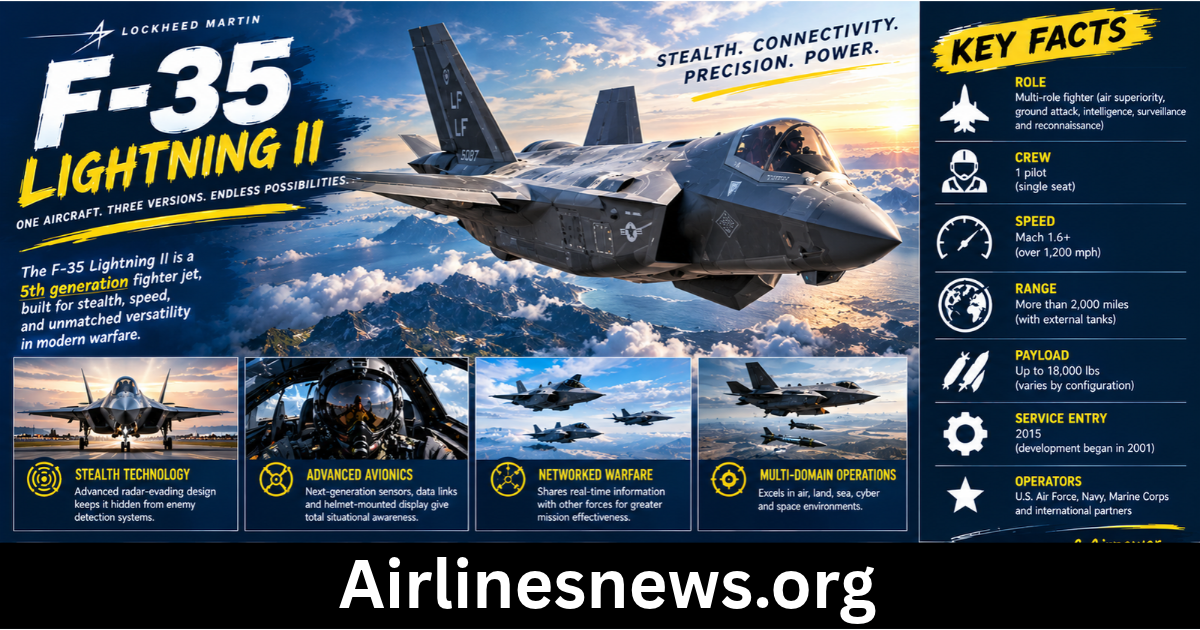
F-35 Fighter Jet: Latest Aviation News, Stealth Technology, and Advanced Capabilities
IntroductionWhat Is the F-35 Fighter Jet?Latest F-35 Fighter Jet Aviation…

F-35 vs F-22: Which Fighter Jet Is Better? Speed, Stealth, Weapons, and Specifications
IntroductionF-35 vs F-22: Quick Comparison1. F-35 vs F-22: Which Fighter…

Boeing 737 MAX 10: Specifications, Features, Capacity, and Latest Updates
IntroductionWhat Is the Boeing 737 MAX 10?SpecificationsKey Features 1. Advanced…