Table of Contents
Choosing the world’s most advanced fighter jet is not as simple as comparing speed, weapons, or maneuverability. Modern combat aircraft combine stealth technology, advanced radar, electronic warfare, artificial intelligence-assisted systems, world’s most advanced fighter jet and sophisticated sensors to gain an advantage in the air.
In 2026, the American F-22 Raptor and F-35 Lightning II are widely regarded as leading fifth-generation fighters. China’s J-20 and Russia’s Su-57 are also important competitors. However, the best aircraft depends on its intended mission: air superiority, ground attack, stealth penetration, or multirole combat.
This article explores the world’s most advanced fighter jets, their technologies, and what makes each aircraft stand out.
What Makes a Fighter Jet the Most Advanced?
A modern fighter jet is evaluated through several important capabilities rather than maximum speed alone.
- Stealth technology: Reduces the aircraft’s radar signature and makes detection more difficult.
- Advanced radar: Helps pilots identify and track airborne and ground-based targets.
- Sensor fusion: Combines information from multiple sensors into a clearer operational picture.
- Electronic warfare: Helps detect, disrupt, and counter hostile electronic systems.
- Weapons integration: Allows an aircraft to use different air-to-air and air-to-ground weapons.
- Maneuverability: Supports aircraft control and performance during demanding flight conditions.
- Networking: Allows fighters to share information with other aircraft, ships, and ground forces.
Fifth-generation fighters combine several of these technologies in a single platform, although their individual strengths differ. Congress.gov+1
Top 5 Most Advanced Fighter Jets in the World
1. F-22 Raptor – United States
<escape> </escape>The <Entity value=”F-22 Raptor” category=”vehicle” disambig=”American fifth-generation air-superiority stealth fighter”/> is frequently considered the leading dedicated air-superiority fighter in the world.
Developed by Lockheed Martin and Boeing, the F-22 combines stealth technology, supercruise, advanced avionics, and exceptional maneuverability. Its design allows it to conduct air-to-air missions while reducing its visibility to enemy radar.
One of its most notable features is supercruise, which allows sustained supersonic flight without continuously using afterburners. Its thrust-vectoring engines also contribute to its maneuverability.
Why it stands out: The F-22 is particularly impressive for air superiority, combining stealth, speed, and advanced combat systems. The U.S. Air Force continues to modernize the aircraft with capability upgrades. <Cite refs={[“turn623316search16″,”turn623316search17”]}/>
2. F-35 Lightning II – United States
The <Entity value=”F-35 Lightning II” category=”vehicle” disambig=”American fifth-generation multirole stealth fighter family”/> is one of the most technologically sophisticated multirole fighter aircraft currently in service.
Unlike the F-22, which was designed primarily for air superiority, the F-35 supports a wider range of missions, including air combat, precision strikes, reconnaissance, and intelligence gathering.
It features advanced radar, electronic warfare equipment, stealth technology, and sensor fusion. These systems help pilots build a detailed picture of the surrounding battlefield and share information with other military platforms.
The F-35 comes in three main versions:
- F-35A: Conventional runway operations.
- F-35B: Short takeoff and vertical landing.
- F-35C: Aircraft carrier operations.
Why it stands out: Its combination of stealth, sensor integration, networking, and multirole flexibility makes it a leading all-round fighter. The U.S. Department of Defense describes it as a fifth-generation multirole aircraft with air-to-air and strike capabilities. <Cite refs={[“turn623316search12″,”turn623316search18”]}/>
3. Chengdu J-20 – China
China’s <Entity value=”Chengdu J-20″ category=”vehicle” disambig=”Chinese fifth-generation stealth fighter aircraft”/> is a major development in the country’s military aviation industry.
Also known as the Mighty Dragon, the J-20 is designed for modern air combat and features stealth-oriented shaping, internal weapons bays, and advanced avionics.
It entered service with the Chinese military in 2017. Its large airframe and long-range design are often associated with missions involving air superiority and operations at considerable distances.
However, detailed information about its radar, electronic warfare systems, and stealth performance is not publicly available. This makes direct comparisons with American fighters difficult.
Why it stands out: The J-20 represents China’s growing ability to develop and operate fifth-generation combat aircraft.
4. Sukhoi Su-57 – Russia
The <Entity value=”Sukhoi Su-57″ category=”vehicle” disambig=”Russian fifth-generation multirole stealth fighter”/> is Russia’s advanced fifth-generation fighter, developed by Sukhoi.
It combines reduced-radar-signature design features, high maneuverability, advanced flight controls, and multirole combat capabilities. The aircraft is intended to perform both air-to-air and air-to-ground missions.
Its design includes internal weapons compartments and advanced onboard systems. Russia has continued developing and upgrading the aircraft, although production scale and the maturity of some technologies remain important considerations.
Why it stands out: The Su-57 combines stealth-oriented design with maneuverability and a broad mission profile, reflecting Russia’s approach to next-generation fighter development.
5. Eurofighter Typhoon – Europe
The <Entity value=”Eurofighter Typhoon” category=”vehicle” disambig=”European twin-engine multirole combat aircraft”/> is a highly capable combat aircraft developed through a European partnership involving the United Kingdom, Germany, Italy, and Spain.
Although it is not a fifth-generation stealth fighter, the Typhoon remains one of the most advanced fourth-generation-plus aircraft.
It features powerful twin engines, advanced radar systems, excellent maneuverability, and a range of air-to-air and air-to-ground weapons. Different operators have introduced upgrades to improve its sensors, electronic warfare systems, and mission capabilities.
Why it stands out: The Typhoon offers strong air-combat performance and multirole flexibility without relying on a full fifth-generation stealth design.
Comparison of the World’s Leading Fighter Jets
| Fighter aircraft | Country | Generation | Main strength |
|---|---|---|---|
| F-22 Raptor | United States | Fifth | Air superiority |
| F-35 Lightning II | United States | Fifth | Multirole capability and sensors |
| J-20 | China | Fifth | Stealth and long-range design |
| Su-57 | Russia | Fifth | Maneuverability and multirole design |
| Eurofighter Typhoon | European partnership | 4.5 generation | Air combat and versatility |
These aircraft cannot be ranked conclusively using public specifications alone. Important information about radar performance, stealth, electronic warfare, weapons effectiveness, and operational tactics remains classified.
Is the F-22 or F-35 the World’s Best Fighter Jet?
The answer depends on the mission.
The F-22 is generally regarded as the stronger specialist for dedicated air-superiority missions. Its combination of stealth, supercruise, and maneuverability makes it particularly suited to air-to-air combat.
The F-35 is arguably the stronger all-round multirole platform. Its sensor fusion, electronic warfare capabilities, and ability to share information make it valuable across different types of military operations.
Neither aircraft is automatically better in every situation. Mission requirements, pilot training, maintenance, weapons, and supporting forces can all influence combat effectiveness.
What Is the Future of Advanced Fighter Jets?
The next generation of military aircraft is expected to include improvements in stealth, artificial intelligence-assisted systems, autonomous technology, and communication networks.
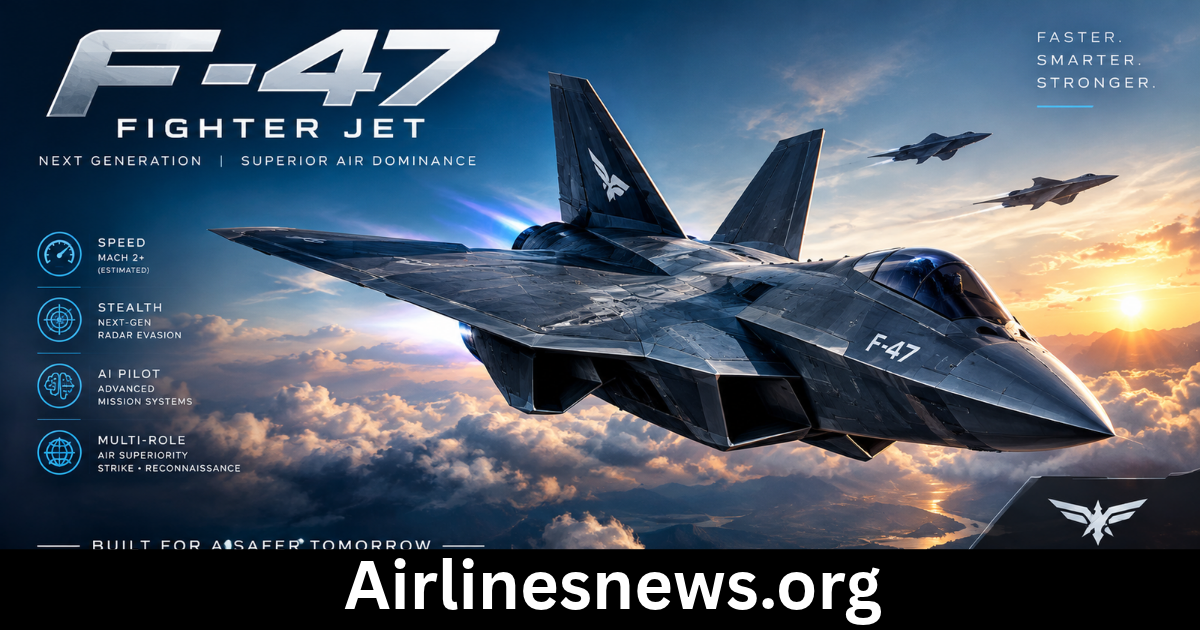
The United States is developing the F-47 under its Next Generation Air Dominance program. The aircraft is intended to introduce sixth-generation capabilities and work alongside other advanced systems. However, it is a development program, not an operational fighter jet today. <Cite refs={[“turn623316search2”]}/>
Other future programs include the Global Combat Air Programme, involving the United Kingdom, Italy, and Japan. These initiatives aim to develop advanced combat-aircraft systems for future military requirements.
The future may also involve crewed fighters working with uncrewed aircraft, allowing pilots to coordinate with autonomous or remotely operated platforms.
Frequently Asked Questions About the World’s Most Advanced Fighter Jet
1. What is the world’s most advanced fighter jet in 2026?
The F-22 Raptor is a leading choice for dedicated air superiority, while the F-35 Lightning II is among the most advanced multirole fighters. There is no universally accepted ranking across every mission.
2. Is the F-22 better than the F-35?
The F-22 specializes in air superiority, while the F-35 offers broader multirole capabilities and advanced sensor integration. The better aircraft depends on the mission.
3. Which country has the most advanced fighter aircraft?
The United States operates two leading fifth-generation fighters, the F-22 and F-35. China and Russia also operate their own fifth-generation designs.
4. Is China’s J-20 better than the F-22?
There is insufficient publicly verified information to establish that the J-20 is better than the F-22. Their exact comparative stealth and sensor capabilities remain classified.
5. Is the Su-57 a true stealth fighter?
The Su-57 incorporates stealth-oriented design features, but its low-observable performance is debated. Its overall capabilities should be evaluated separately from its fifth-generation designation.
6. What is a sixth-generation fighter jet?
A sixth-generation fighter is a future combat aircraft expected to feature more advanced stealth, sensors, networking, and potentially crewed-uncrewed teaming. No sixth-generation fighter has entered operational service as of 2026.
7. Which fighter jet has the best technology?
The F-35 is particularly notable for sensor fusion, information sharing, and multirole systems. The F-22 is especially advanced in air-superiority capabilities. The answer depends on which technology is being evaluated.
Conclusion
The world’s most advanced fighter jets demonstrate how quickly military aviation technology is evolving. The F-22 Raptor remains a leading air-superiority fighter, world’s most advanced fighter jet while the F-35 Lightning II stands out for its multirole flexibility and advanced sensor systems. China’s J-20 and Russia’s Su-57 also represent important developments in fifth-generation aviation. There is no single aircraft that dominates every category. Stealth, radar, weapons, maneuverability, pilot training, and mission requirements all contribute to a fighter’s effectiveness. As sixth-generation programs develop, the next era of military aviation is likely to bring even more sophisticated aircraft and connected combat systems.
Related Posts

Emirates Airline News Latest Updates, Flights, Fleet and Travel Changes
Latest Emirates Airline NewsEmirates Fleet and Aircraft UpdatesEmirates Premium Economy…

Commercial Airplane Types: 1 A Complete Guide to Different Passenger Aircraft
IntroductionWhat Are Commercial Airplanes?1. Narrow-Body Commercial AirplanesBoeing 737Airbus A320 FamilyBoeing…
F47 Fighter Jet: 7 Powerful Facts About America’s Sixth-Generation Stealth Aircraft
1. What Is the F47 Fighter Jet?2. Why Is the…