Table of Contents
Have you ever looked out of an airplane window and wondered how such a massive machine can fly thousands of feet above the ground? Airplanes may look heavy and complex, but their ability to fly comes from well-understood principles of physics and aerodynamics. how do airplanes fly Their wings interact with moving air to create lift, while powerful engines provide the thrust needed to move forward.
Understanding how airplanes fly involves four main forces: lift, weight, thrust, and drag. These forces work together to help an aircraft take off, climb, cruise, turn, and land safely.
How Do Airplanes Fly?
Airplanes fly because their wings generate an upward force called lift as the aircraft moves through the air. The engines produce thrust, pushing or pulling the airplane forward. how do airplanes fly As the airplane gains speed, air flows around its wings, creating pressure differences and changing the direction of the airflow. These aerodynamic effects produce lift.
For an airplane to remain at a steady altitude, lift must balance its weight. At the same time, thrust must balance drag during steady, level flight. When pilots adjust these forces, the airplane can climb, descend, accelerate, or slow down.
NASA explains that lift is created through the interaction between an aircraft and the air moving around it. Most of the lift produced by a typical airplane comes from its wings.
The Four Main Forces That Make an Airplane Fly
Four forces act on an airplane during flight. Understanding how they work together makes the science of aviation easier to understand.
1. Lift
Lift is the aerodynamic force that acts perpendicular to the airflow and helps support the airplane against gravity. It is mainly produced by the wings.
As a wing moves through the air, its shape and angle cause the airflow to change direction. Pressure differences develop around the wing, and the wing also deflects air downward. how do airplanes fly The resulting aerodynamic force has an upward component that helps keep the airplane in the sky.
2. Weight
Weight is the force of gravity pulling the airplane toward Earth. It includes the weight of the aircraft itself, passengers, crew, fuel, and cargo.
For level flight, the lift produced by the airplane must balance its weight. If the aircraft becomes heavier, it generally needs more lift to maintain the same flight conditions.
3. Thrust
Thrust is the forward force that moves an airplane through the air. It comes from the aircraft’s engines.
Jet engines produce thrust by accelerating exhaust gases backward. how do airplanes fly Propeller-driven airplanes use rotating propeller blades to accelerate air backward, creating a forward reaction force.
Without enough thrust to overcome drag, an airplane cannot maintain its required airspeed.
4. Drag
Drag is the resistance an airplane experiences as it moves through the air. It acts opposite to the direction of motion.
Airplane designers reduce drag by creating streamlined fuselages, carefully shaped wings, and efficient engine installations. Lower drag helps aircraft travel efficiently and reduces fuel consumption.
During steady, level flight, thrust balances drag while lift balances weight. <Cite refs={[“turn727279search4″,”turn727279search6”]}/>
How Do Airplane Wings Create Lift?
Airplane wings are specially designed surfaces known as airfoils. Their shape and position help control the airflow around the aircraft.
When an airplane moves forward, its wings interact with the surrounding air. The airflow changes speed and direction around the wing, producing a pressure distribution that creates an aerodynamic force. Part of this force acts upward and supports the airplane.
Two important scientific principles help explain this process:
- Bernoulli’s principle: In appropriate airflow conditions, higher fluid speed is associated with lower static pressure. This helps explain pressure differences around a wing.
- Newton’s third law: When a wing deflects air downward, the air exerts an opposing force on the wing. This contributes to the upward lift.
These are complementary ways of describing the same aerodynamic process. A common misconception is that air traveling over the top of a wing must meet the air traveling underneath at the same time. how do airplanes fly This is called the equal-transit-time theory, and it is not a correct explanation of lift. <Cite refs={[“turn727279search0″,”turn727279search2″,”turn727279search13”]}/>
How Do Airplanes Take Off?
An airplane takes off when it reaches the speed and aerodynamic conditions needed to generate sufficient lift.
The pilot increases engine power, and the aircraft accelerates along the runway. As airspeed increases, the wings generate more lift. Near the appropriate takeoff speed, the pilot raises the nose using the flight controls, how do airplanes fly increasing the wing’s angle of attack.
The airplane then becomes airborne and begins climbing. The required takeoff speed depends on the aircraft’s weight, configuration, runway conditions, and weather.
Large commercial aircraft need long runways because they require significant acceleration before reaching their safe takeoff speed.
How Do Airplanes Stay in the Air?
After takeoff, pilots adjust engine power and flight controls to maintain the desired altitude and direction. During cruise, the aircraft usually flies at a selected altitude and speed where the four main forces are balanced.
The airplane does not need to keep climbing to remain airborne. Its wings continue producing lift as long as the aircraft maintains suitable airflow and operating conditions.
Pilots and automated flight systems monitor altitude, speed, direction, engine performance, and other important information throughout the journey.
How Do Airplanes Turn in the Sky?
Airplanes turn using control surfaces that change the direction of the aircraft.
The main control surfaces include:
- Ailerons: Located near the outer sections of the wings, they help the airplane roll left or right.
- Elevator: Usually located on the horizontal tail, it controls the airplane’s nose-up and nose-down movement.
- Rudder: Located on the vertical tail, it controls yaw, moving the nose left or right.
To make a coordinated turn, the airplane banks so that the lift force is tilted. Part of the lift then acts horizontally, helping the aircraft follow a curved flight path.
How Do Airplanes Land?
Landing is the process of bringing an airplane safely from the air onto a runway. Pilots gradually reduce thrust and descend toward the airport while maintaining the correct speed and approach path.
Flaps and other high-lift devices are commonly extended to help wings produce sufficient lift at lower speeds. These devices also increase drag, helping the airplane slow down.
Once the aircraft touches the runway, spoilers may reduce lift, while wheel brakes and other braking systems help bring it to a stop. how do airplanes fly Pilots follow specific procedures based on aircraft type, runway conditions, and weather.
Frequently Asked Questions
1. How do airplanes fly without falling?
Airplanes stay in the air because their wings generate lift as they move through the atmosphere. During steady, level flight, lift balances the airplane’s weight.
2. What makes an airplane move forward?
The engines produce thrust. Jet engines accelerate exhaust gases backward, while propellers push air backward to create forward motion.
3. Can an airplane fly without engines?
Yes, an airplane can glide without engine power. Its forward movement through the air allows the wings to continue producing lift, although the aircraft gradually loses altitude.
4. Why do airplane wings have a curved shape?
Wing shapes are designed to manage airflow and produce lift efficiently. The exact shape varies according to the aircraft’s speed, purpose, and aerodynamic requirements.
5. What are the four forces of flight?
The four forces are lift, weight, thrust, and drag. Their relationship determines how an airplane moves through the air.
6. How does an airplane climb?
An airplane climbs when its flight path is directed upward. Pilots adjust thrust, pitch, and other flight conditions to achieve and maintain the desired climb.
7. Why do airplanes need wings?
Wings generate most of the lift required to support an airplane in flight. Their aerodynamic shape and interaction with moving air make controlled flight possible.
Conclusion
How do airplanes fly? They use the principles of aerodynamics and physics to turn forward movement into lift. Their wings interact with moving air, engines provide thrust, and carefully designed control surfaces allow pilots to guide the aircraft. The four forces of flight—lift, weight, thrust, and drag—work together during every stage of a journey. how do airplanes fly From takeoff and climbing to cruising and landing, these forces make modern aviation possible. Understanding them reveals the science behind one of the most important achievements in transportation.
Related Posts
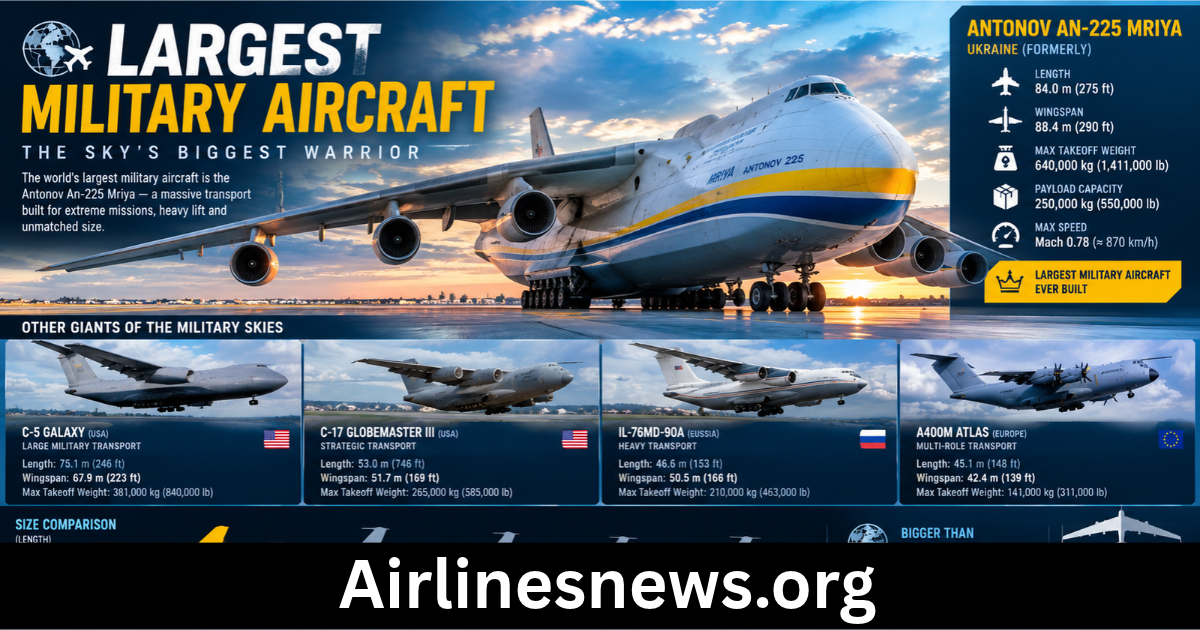
Largest Military Aircraft in the World: 1 Biggest Planes by Size and Payload
What Is the Largest Military Aircraft in the World?Top 7…
Fastest Military Helicopter: 1 Top Speed, Specifications, and World’s Fastest Helicopters
What Is the Fastest Military Helicopter?Top 7 Fast Military Helicopters1.…
SR-72 Aircraft: Latest Aviation News, Mach 6 Speed, and Hypersonic Technology
IntroductionWhat Is the SR-72 Aircraft?Latest SR-72 Aircraft News in 2026Has…