Table of Contents
Commercial airplanes are among the fastest forms of transportation available to the public. Modern passenger jets can travel across countries and continents in just a few hours, covering enormous distances at high altitude. how fast do commercial airplanes fly But their speed is not constant throughout a journey.
The speed of a commercial airplane depends on its design, engine performance, altitude, weather, and stage of flight. Understanding these factors helps explain how quickly passenger aircraft travel and why flight times can vary.
How Fast Do Commercial Airplanes Fly at Cruising Altitude?
Most commercial passenger jets cruise at approximately 830–950 km/h (515–590 mph). This is generally equivalent to Mach 0.78–0.85, or roughly 78% to 85% of the speed of sound.
Cruising is the main part of a typical flight. Once an aircraft reaches its planned altitude, pilots maintain a suitable speed that balances fuel efficiency, passenger comfort, and travel time.
The exact cruising speed varies between aircraft models. Long-distance wide-body jets often cruise around Mach 0.85, while many narrow-body passenger aircraft operate closer to Mach 0.78 or 0.80. <Cite refs={[“turn173980search12″,”turn173980search1”]}/>
Average Cruising Speeds of Popular Commercial Airplanes
Different commercial aircraft have different cruising speeds because their engines, wings, weight, and aerodynamic designs are not identical.
| Commercial airplane | Approximate cruise speed |
|---|---|
| Boeing 737 | 830–850 km/h |
| Airbus A320 | 830–850 km/h |
| Boeing 747-8 | 910–915 km/h |
| Boeing 777 | Around 890–900 km/h |
| Boeing 787 Dreamliner | Around 900 km/h |
| Airbus A350 | Around 900 km/h |
| Airbus A380 | Around 900 km/h |
| ATR 72 turboprop | Around 500–520 km/h |
These figures are approximate and may vary by aircraft version, altitude, weight, and operating conditions. <Cite refs={[“turn173980search1″,”turn173980search7”]}/>
How Fast Do Airplanes Fly During Different Stages of Flight?
Commercial airplanes do not maintain the same speed from departure to arrival. Their speed changes as they move through different phases of a journey.
1. Taxiing
Before takeoff, an airplane moves slowly along airport taxiways. Its speed is generally much lower than its flying speed and depends on airport conditions, traffic, and instructions from air traffic control.
2. Takeoff Speed
Most large commercial jet aircraft lift off at approximately 240–290 km/h (150–180 mph). However, there is no universal takeoff speed.
The required speed depends on aircraft weight, runway length, temperature, wind, flap settings, and other performance factors. A fully loaded aircraft may need a higher takeoff speed than the same aircraft operating with fewer passengers and less fuel. <Cite refs={[“turn173980search1”]}/>
3. Climbing Speed
After leaving the runway, the airplane climbs toward its assigned cruising altitude. Pilots adjust speed and engine power while following air traffic control instructions.
During this stage, the aircraft gradually gains altitude and prepares for efficient cruise flight.
4. Cruising Speed
Cruising is generally the fastest sustained part of a conventional commercial flight. Most passenger jets travel at approximately 830–950 km/h, depending on the aircraft and conditions.
Long-distance flights may remain at cruising altitude for several hours, covering thousands of kilometers.
5. Landing Speed
Before landing, the airplane slows down and lowers its landing gear and flaps. Large commercial jets often approach the runway at approximately 220–280 km/h (135–175 mph), although the exact speed depends on aircraft type, weight, and weather.
Pilots calculate the appropriate approach speed for each flight to maintain safe handling and landing performance.
What Is Mach Speed in Aviation?
Mach speed measures how fast an aircraft travels compared with the local speed of sound.
- Mach 0.50: Half the speed of sound.
- Mach 0.78: 78% of the speed of sound.
- Mach 0.85: 85% of the speed of sound.
- Mach 1.00: The speed of sound.
- Mach 2.00: Twice the speed of sound.
The speed of sound changes with atmospheric temperature. Because cruising aircraft fly in cold air at high altitudes, Mach numbers are especially useful for measuring their speed.
Most modern commercial passenger jets operate below Mach 1.0. The Federal Aviation Administration explains that civilian jet aircraft normally cruise within approximately Mach 0.7 to Mach 0.90. <Cite refs={[“turn173980search12”]}/>
Airspeed vs. Ground Speed: What Is the Difference?
Airspeed and ground speed are two different measurements used in aviation.
Airspeed measures how fast an aircraft moves through the surrounding air. It is important for aircraft performance, navigation, and safe flight operations.
Ground speed measures how quickly the airplane travels over the Earth’s surface. It is affected by wind.
For example, an aircraft might travel through the air at 900 km/h. With a strong tailwind, its ground speed could be higher. With a strong headwind, its ground speed could be lower.
This explains why the same flight route can take different amounts of time depending on wind conditions. <Cite refs={[“turn173980search7″,”turn173980search5”]}/>
What Factors Affect Commercial Airplane Speed?
Several factors influence how fast a passenger airplane can travel.
Aircraft Design
The shape of an airplane’s wings, fuselage, and engine installation affects aerodynamic drag and performance. Aircraft manufacturers design commercial jets to operate efficiently within specific speed ranges.
Engine Performance
Jet engines provide the thrust needed to move an aircraft through the air. Engine power, fuel efficiency, and aircraft weight all influence achievable speed.
Flying Altitude
Commercial aircraft generally cruise at high altitudes, where the thinner air reduces aerodynamic drag. However, pilots must also consider engine performance, weather, and air traffic restrictions.
Wind Conditions
Headwinds reduce ground speed, while tailwinds increase it. The jet stream, a band of strong winds at high altitude, can significantly influence flight duration.
Aircraft Weight
Passengers, luggage, cargo, and fuel contribute to an aircraft’s total weight. Weight affects takeoff performance, climb capability, fuel consumption, and the speeds required for different flight stages.
Why Don’t Commercial Airplanes Fly Faster?
It might seem that airlines should operate their aircraft at maximum speed to reduce journey times. However, flying faster can significantly increase fuel consumption and operating costs.
Aircraft manufacturers therefore design commercial jets around an efficient balance between speed, range, fuel use, and passenger capacity.
Flying close to the speed of sound also introduces aerodynamic challenges, including increased drag and shock-wave effects. For most airline operations, conventional subsonic flight remains more economical than supersonic travel.
How Fast Was the Concorde Compared With Modern Airliners?
The Concorde was a supersonic passenger aircraft that cruised at approximately Mach 2.02, or around 2,180 km/h under typical cruising conditions.
That was more than twice the cruising speed of modern conventional passenger jets.
Concorde operated scheduled passenger services from 1976 until 2003. It was retired because of a combination of high operating costs, limited passenger capacity, noise restrictions, and declining commercial demand. Today, ordinary commercial passenger jets remain subsonic. <Cite refs={[“turn173980search13″,”turn173980search3”]}/>
Frequently Asked Questions (FAQs)
1. How fast do commercial airplanes fly in mph?
Most commercial passenger jets cruise at approximately 515–590 mph, depending on the aircraft model, altitude, and weather conditions.
2. How fast does a Boeing 737 fly?
A Boeing 737 typically cruises at approximately Mach 0.78–0.79, equivalent to around 830–850 km/h.
3. How fast does an Airbus A320 fly?
The Airbus A320 family generally cruises at approximately Mach 0.78, or around 830–850 km/h.
4. How fast do airplanes fly during takeoff?
Many large commercial jets take off at approximately 240–290 km/h. The exact speed depends on aircraft weight, runway conditions, weather, and configuration.
5. How fast do commercial airplanes fly when landing?
Many commercial jets approach the runway at approximately 220–280 km/h. The actual approach speed varies with aircraft type and landing weight.
6. Can commercial airplanes fly faster than the speed of sound?
Most modern commercial passenger jets operate below the speed of sound. The retired Concorde was a notable exception, cruising at approximately twice the speed of sound.
7. Does wind affect how fast an airplane travels?
Yes. A tailwind increases an airplane’s ground speed, while a headwind reduces it. This can change the time needed to complete a flight.
Conclusion
Commercial airplanes usually fly at approximately 830–950 km/h during cruising, making them an efficient way to travel long distances. how fast do commercial airplanes fly Aircraft such as the Boeing 737 and Airbus A320 operate at slightly lower cruise speeds than wide-body jets such as the Boeing 787, Airbus A350, and Airbus A380. However, airplane speed changes during takeoff, climbing, cruising, and landing. Wind, altitude, aircraft design, and weight also influence performance. Although supersonic passenger travel has not returned to regular airline service, modern commercial aircraft continue to provide a practical balance of speed, safety, and fuel efficiency.
Related Posts

Most Powerful Military Aircraft in the World: Top 10 Advanced Warplanes
What Makes a Military Aircraft Powerful?Top 10 Most Powerful Military…

Black Hawk Helicopter: 1 Speed, Features, Models, and Military Uses
IntroductionWhat Is a Black Hawk Helicopter?How Fast Can a Black…
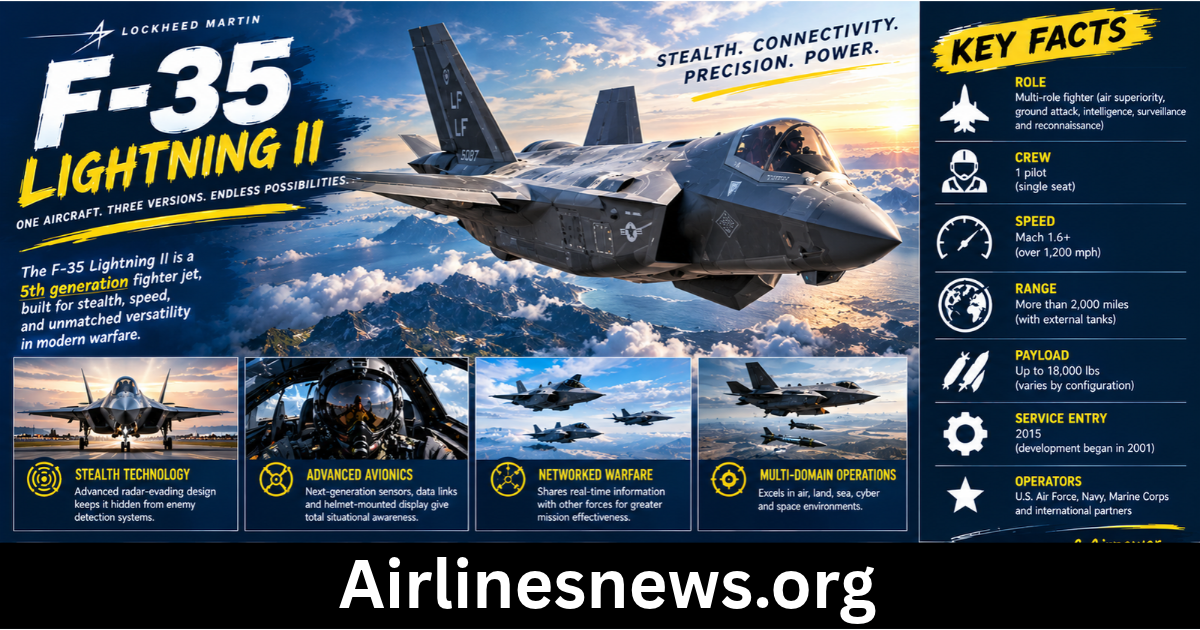
F-35 Fighter Jet: Latest Aviation News, Stealth Technology, and Advanced Capabilities
IntroductionWhat Is the F-35 Fighter Jet?Latest F-35 Fighter Jet Aviation…