Table of Contents
The C-17 Globemaster III is one of the most capable military transport aircraft in modern aviation. Manufactured by Boeing, this four-engine jet aircraft is designed to carry heavy military equipment, troops, vehicles, c-17 globemaster and emergency supplies over long distances. Its combination of strategic range and tactical landing capabilities makes it a valuable asset for military forces around the world.
Since entering service with the United States Air Force in 1993, the C-17 has supported military deployments, humanitarian relief missions, medical evacuations, and international logistics operations. Its ability to transport large cargo loads directly to smaller airfields distinguishes it from many conventional transport aircraft.
What Is the C-17 Globemaster III?
The C-17 Globemaster III is a large military strategic and tactical transport aircraft developed initially by McDonnell Douglas, which later became part of Boeing.
It features a high-wing design, four powerful turbofan engines, a spacious cargo compartment, and a rear loading ramp. These features allow it to transport military vehicles, helicopters, heavy machinery, palletized cargo, and personnel.
Unlike aircraft designed exclusively for long-distance transportation between major airports, the C-17 can also operate from relatively short and austere airfields. This flexibility makes it particularly useful for military deployments and emergency operations.
C-17 Globemaster III Specifications
The C-17 combines a large cargo capacity with high-speed jet performance. Here are its main specifications based on U.S. Air Force information.
| Specification | C-17 Globemaster III |
|---|---|
| Manufacturer | Boeing |
| Aircraft type | Military transport aircraft |
| Engines | Four Pratt & Whitney F117-PW-100 turbofans |
| Engine thrust | 40,440 pounds each |
| Maximum cruise speed | Approximately 450 knots (833 km/h) |
| Length | 53 meters |
| Wingspan | 51.75 meters |
| Height | 16.79 meters |
| Maximum payload | 77,519 kg |
| Maximum takeoff weight | 265,352 kg |
| Crew | Three |
| Service ceiling | Approximately 45,000 feet |
Specifications may vary slightly between published sources and operating configurations. <Cite refs={[“turn664700search0″,”turn664700search2”]}/>
How Fast Can a C-17 Globemaster Fly?
The C-17 Globemaster III has a published cruise speed of approximately 450 knots, equivalent to around 833 kilometers per hour. This makes it significantly faster than many turboprop military transport aircraft.
Its jet engines allow it to move large cargo loads over long distances efficiently. The aircraft can also receive fuel during flight, extending its operational reach and supporting long-range military deployments.
Actual speed and range depend on cargo weight, fuel requirements, altitude, weather, and mission conditions.
How Much Cargo Can a C-17 Carry?
One of the C-17’s biggest advantages is its impressive payload capacity. It can carry up to approximately 77.5 tonnes of cargo under specified conditions.
Its large cargo compartment measures approximately 26.8 meters long, 5.5 meters wide, and 3.8 meters high.
The aircraft can transport:
- Main battle tanks and armored vehicles
- Military trucks and trailers
- Helicopters and engineering equipment
- Palletized military supplies
- Humanitarian relief materials
- Troops and paratroopers
Its rear loading ramp and cargo-handling equipment allow crews to load and unload heavy equipment efficiently. The aircraft can also carry a combination of personnel and cargo depending on the mission configuration.
What Is the C-17 Globemaster Used For?
The C-17 performs several important military and humanitarian missions.
1. Military Cargo Transportation
Its primary mission is transporting heavy equipment and supplies. Military forces use it to move vehicles, machinery, ammunition, spare parts, and other essential materials between bases and operational locations.
2. Troop Transport
The C-17 can transport military personnel over long distances. It can also support airborne operations by dropping paratroopers and their equipment.
3. Airdrop Operations
When landing is not possible, the C-17 can release cargo and personnel by parachute. Its airdrop capabilities allow supplies to reach remote locations and operational areas.
4. Medical Evacuation
The aircraft can be configured for aeromedical evacuation. Medical teams can transport injured personnel using specialized medical equipment, stretchers, and onboard treatment facilities.
5. Humanitarian Relief
The C-17 has supported disaster-relief operations by delivering food, water, medical supplies, rescue equipment, and emergency personnel to affected regions.
6. International Military Deployment
Military forces use the C-17 to move heavy equipment and personnel across continents. Its combination of range, payload, and aerial refueling capability supports rapid international deployments.
What Makes the C-17 Different From Other Cargo Planes?
The C-17 combines features normally associated with strategic and tactical transport aircraft.
Its large payload capacity allows it to carry heavy military equipment, while its specialized wing design and landing systems support operations at relatively short airfields.
One particularly useful feature is its thrust-reversing system. The engines can redirect thrust to help slow the aircraft during landing. This also helps the C-17 maneuver on the ground, including backing up under suitable conditions.
According to the U.S. Air Force, the aircraft can operate from runways as short as approximately 3,500 feet, depending on operating conditions. <Cite refs={[“turn664700search0″,”turn664700search3”]}/>
C-17 Globemaster vs. C-130 Hercules
The C-17 Globemaster III and C-130 Hercules are both important military transport aircraft, but they serve different roles.
| Feature | C-17 Globemaster III | C-130 Hercules |
|---|---|---|
| Engine type | Four turbofan engines | Four turboprop engines |
| Main role | Strategic and tactical airlift | Tactical airlift |
| Maximum payload | About 77.5 tonnes | About 21 tonnes for C-130J |
| Speed | About 833 km/h cruise | About 675 km/h cruise for C-130J |
| Typical advantage | Heavy cargo and long-distance transport | Remote and rough-field operations |
The C-17 is designed to carry much heavier loads, while the C-130 is smaller and particularly effective at reaching remote locations with limited runway infrastructure.
Which Countries Operate the C-17 Globemaster?
The C-17 is operated by several countries and multinational organizations. Operators include:
- United States
- United Kingdom
- Australia
- Canada
- India
- Kuwait
- Qatar
- United Arab Emirates
- Strategic Airlift Capability, a multinational initiative
These operators use the aircraft for military transportation, international deployments, disaster relief, and humanitarian assistance.
Its international presence reflects the importance of heavy airlift capabilities in modern military logistics. <Cite refs={[“turn664700search2″,”turn664700search26”]}/>
History of the C-17 Globemaster III
The C-17 program was developed to provide the U.S. military with a transport aircraft capable of carrying large equipment while maintaining the flexibility to use smaller airfields.
The aircraft completed its first flight on September 15, 1991. The first production aircraft was delivered to the U.S. Air Force in June 1993, and the C-17 became operational in January 1995.
Over the years, it has supported major military deployments and humanitarian missions around the world. Production ended in 2015, but the aircraft continues to serve with multiple air forces.
Frequently Asked Questions (FAQs)
1. What is a C-17 Globemaster III?
The C-17 Globemaster III is a Boeing-manufactured military transport aircraft designed to carry heavy cargo, military vehicles, troops, and humanitarian supplies.
2. How fast does a C-17 Globemaster fly?
Its published cruise speed is approximately 450 knots, or 833 kilometers per hour. Actual flight speed varies with operating conditions.
3. How much weight can a C-17 carry?
The aircraft has a maximum payload capacity of approximately 77,519 kilograms, or 77.5 tonnes.
4. How many people can a C-17 carry?
The aircraft can transport up to 102 troops or paratroopers in a specified configuration. Passenger capacity changes depending on the cargo and seating arrangement.
5. Can a C-17 carry a tank?
Yes. The C-17 can transport large military vehicles, including an M1 Abrams main battle tank, provided the load meets aircraft weight and loading requirements.
6. Who manufactures the C-17 Globemaster III?
Boeing manufactures the C-17 Globemaster III. The aircraft was originally developed by McDonnell Douglas before the company became part of Boeing.
7. Is the C-17 still in service?
Yes. The C-17 remains in active service with the U.S. Air Force and several international operators.
Conclusion
The C-17 Globemaster III is one of the most versatile heavy military transport aircraft ever developed. Its powerful turbofan engines, large cargo compartment, impressive payload capacity, and ability to operate from shorter airfields make it essential for modern airlift operations. c-17 globemaster From transporting tanks and troops to delivering emergency supplies and evacuating injured personnel, the C-17 performs missions that support both military operations and humanitarian efforts. Although production has ended, its capabilities ensure that the Globemaster III remains an important aircraft in global military aviation.
Related Posts
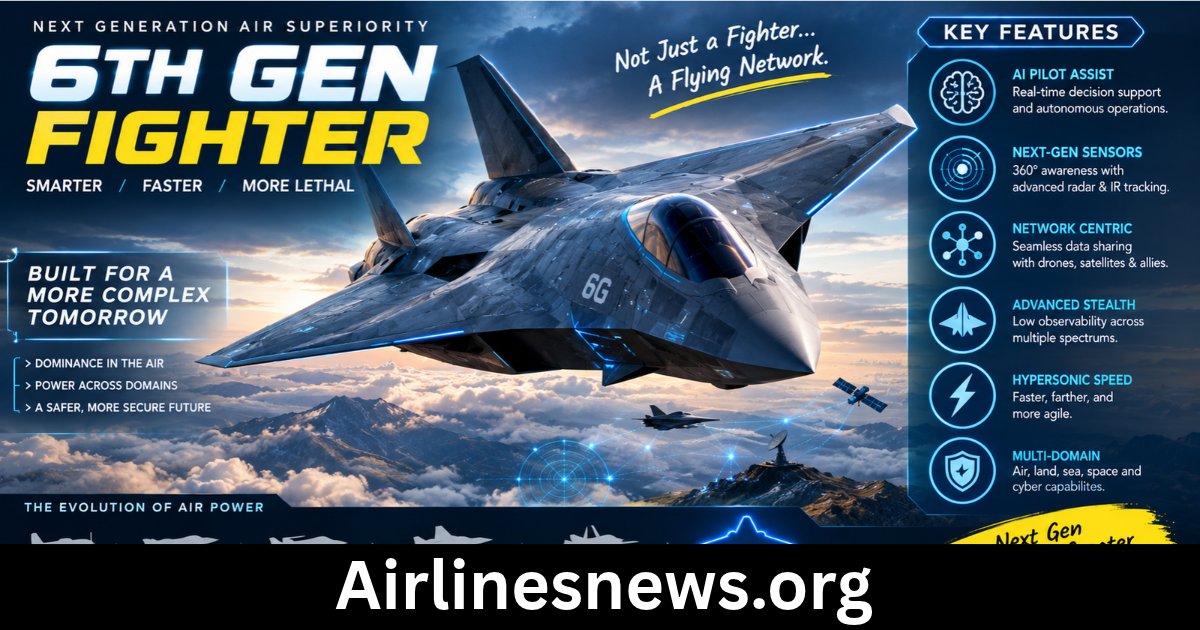
6th Gen Fighter: Latest News, Technology and the Future of Air Combat
Introduction6th gen fighter Jets: Latest News in 20261. US F-47…

F-47 Fighter Jet: Latest News, Features, Technology and Future of Air Combat
IntroductionWhat Is the F-47 Fighter Jet?F-47 Fighter Jet Latest News…

Airline News Today December 2025 Major Aviation Updates and Industry Trends
Major Airline News Today December 2025IndiGo Flight Cancellations Become a…